

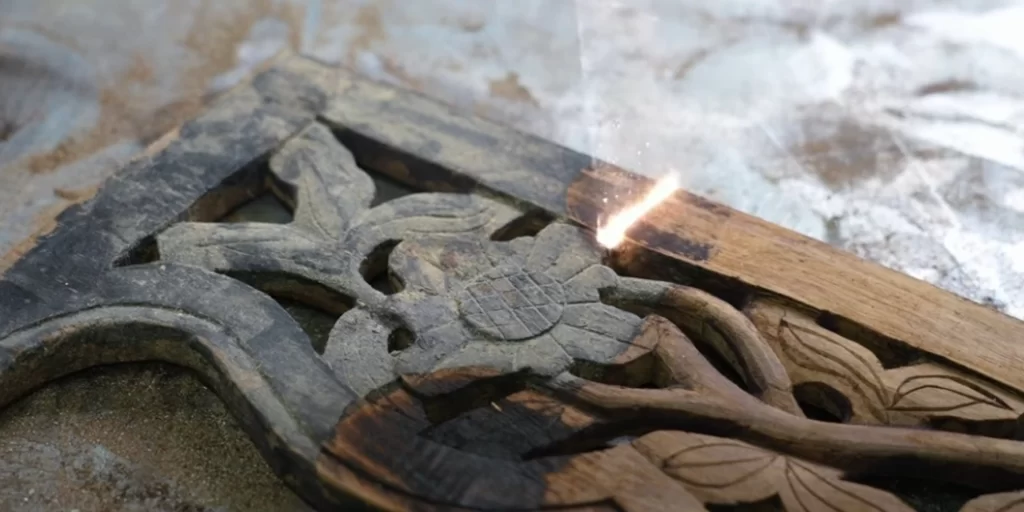
Laser ablation is a precise, non-contact cleaning method that can remove varnish from wood without the sanding dust, heavy scraping, or chemical strippers that traditional methods require. It works by directing controlled laser energy at the varnish layer, breaking it down and lifting it away while leaving the wood underneath intact when properly calibrated.
For wood restoration projects, that makes it especially useful on detailed trim, furniture, beams, doors, and architectural pieces where preserving the grain and surface detail matters.
What Laser Ablation Does
Laser ablation uses concentrated light energy to target unwanted coatings on a surface. When the beam hits the varnish, the coating absorbs the energy and breaks apart, turning into fine vapor or residue that can be collected or wiped away.
Because the laser can be adjusted for power, speed, and pulse frequency, it can be set to remove the varnish layer without aggressively cutting into the wood itself. That level of control is what makes it different from sanding or blasting.
Why It Works Well on Wood
Wood can be delicate, especially when it is old, carved, or historically valuable. Traditional removal methods often create problems like gouging, uneven removal, dust, or chemical saturation.
Laser ablation solves many of those issues because it is:
- Non-contact, so there is no abrasive force on the wood.
- Highly controlled, so only the coating is targeted.
- Cleaner, with far less mess than sanding.
- Better for detail work, including corners, grooves, and carved profiles.
This is why laser varnish removal is often a strong option for furniture restoration, timber beams, millwork, antique pieces, and specialty architectural wood.
Where It Performs Best
Laser ablation is most effective when the varnish layer is the main material being removed and the wood beneath is stable enough to handle the process. It can be used on:
- Furniture restoration.
- Wood beams and posts.
- Doors and trim.
- Cabinet surfaces.
- Antique wood pieces.
- Decorative architectural woodwork.
On projects like these, the laser can remove old yellowed varnish, worn finishes, or buildup from repeated refinishing attempts while keeping the natural wood character visible.
Benefits Over Traditional Methods
The biggest advantage is precision. Sanding can flatten details and chemical strippers can be messy, hazardous, and time-consuming. Laser ablation reduces those problems by focusing on the coating itself.
Other benefits include:
- Less cleanup.
- No harsh chemicals.
- Reduced risk of over-removal.
- Better detail preservation.
- Faster work on small or complex surfaces.
For customers who want a clean restoration result without damaging the wood, this can be a major advantage.
What Results to Expect
When done correctly, laser ablation can reveal the raw wood beneath the varnish and prepare it for a new finish or restoration. The surface may still need light finishing depending on the project, but the bulk of the varnish removal can be done quickly and accurately.
The final result is often a cleaner surface with preserved grain detail and less surface disturbance than conventional methods.
Important Considerations
Not every wood surface is a perfect candidate. Soft woods, highly damaged pieces, or finishes with mixed coatings may require testing first. Different varnish types, thicknesses, and colors can respond differently to the laser.
A proper test spot is always smart before committing to the full project. That helps confirm the settings, the speed, and the expected finish quality before starting larger areas.
Conclusion
Laser ablation is an effective way to remove varnish from wood when precision, cleanliness, and surface preservation matter. It gives restorers and property owners a modern alternative to sanding and chemicals, especially on detailed or valuable wood surfaces.
For the right project, it can strip old varnish cleanly while protecting the beauty and character of the wood underneath.

Leave a Reply